
Key takeaways
- RecoSMA works on an Erbium (2940 nm) laser, with an attachment that splits each pulse into very many micro-beams.
- It is aimed at skin quality: fine lines, rough texture, dullness. It is not a lift and not a replacement for volume.
- Published studies are small and short, so I treat the results as encouraging, not proven.
- Downtime is usually a few days of redness and swelling, though this varies with the settings.
- Indian skin needs careful settings and strict sun protection before and after, because pigment changes are the main risk with any laser.
What exactly is RecoSMA?
People ask me this because the name sounds like a brand of something exotic. It is simpler than that. RecoSMA is a way of delivering an Erbium laser. Erbium lasers have been used for skin resurfacing for years, because their wavelength is absorbed strongly by water in the skin.
See, what happens is, a normal Erbium laser can remove a layer of the skin surface. That gives a strong result but also a longer recovery. With RecoSMA, an optical attachment breaks each pulse into a very large number of micro-beams. A 2018 clinical and histological study by Trelles and colleagues describes about 10,000 micro-beams per square centimetre, each making a tiny opening of roughly 50 microns, far smaller than the full surface layer.
The idea is that the surface is only touched in tiny dots, while the energy produces pressure waves that reach the deeper layer, the dermis, where collagen lives. The researchers describe this as a mechanical effect rather than heat. That is very important to understand: the mechanism is the authors' explanation, and it is still being studied.
What does RecoSMA treat?
I think of it as a skin-quality treatment. In my clinic I would consider it for: - Fine lines, especially the crinkly lines on the cheeks and around the eyes - Rough or uneven texture - Skin that looks dull or tired - Mild sun damage
It is not what I would use for: - Deep folds that are really a volume problem (that needs a different conversation, see dermal fillers explained) - Sagging jowls or a loose neck - Active acne, an active infection or a cold sore on the face
The Mayo Clinic makes the same point about laser resurfacing in general: it improves fine wrinkles, spots and texture, but it does not tighten sagging skin.
What do the studies actually show?
Here is the honest picture.
| Study | Who was treated | What was found | Limits |
|---|---|---|---|
| Trelles et al., 2018, facial rejuvenation | 26 women, skin types II to V, two sessions three weeks apart | Fine-line scores improved at 3 months and were still better than baseline at 6 months, though some of the gain had faded; biopsies showed more compact collagen at 3 months | Small, no control group, short follow-up, one author linked to the maker |
| Hernández et al., 2015, leg ulcers | 17 older adults with chronic ulcers | Many ulcers shrank over 12 weekly sessions | Not a cosmetic study; small, no control group |
Two things stand out for me. First, in the facial study the improvement was larger at three months than at six. Skin keeps ageing, so results need maintenance. Second, the study included darker skin types, and the authors reported no pigment changes. That is reassuring, but 26 people is not enough for me to promise anything to an Indian patient. I tell people it is a reasonable option with modest, gradual results and limited long-term data.
What is the treatment like, and how much downtime?
Normally the session goes like this: 1. Cleansing, then a numbing cream for some time before treatment. 2. The laser passes over the face. Most people describe heat and a prickling feeling. In the facial study, the main complaint was mild to moderate discomfort during treatment. 3. Cooling and a soothing cream afterwards.
After treatment, expect redness and some swelling. In the 2018 study, redness faded over about two weeks, and people were back to normal activities within about four days. Your experience depends on the settings used, so I tell people to keep a few quiet days free rather than book RecoSMA the day before a wedding.
Is it safe for Indian skin?
Any laser on brown skin carries a risk of darker patches after treatment (post-inflammatory pigmentation). DermNet and the Mayo Clinic both note that darker or tanned skin is more prone to colour changes after laser treatment, and recommend a test spot and careful sun protection.
So, in practice, I: - Ask you to avoid a tan for some weeks before treatment. Mumbai sun is not gentle. - Prepare the skin if there is existing pigmentation or melasma, and sometimes delay treatment. - Use conservative settings, especially for the first session. - Give you a written aftercare plan: gentle cleanser, moisturiser, sunscreen every day, no scrubs or strong actives for a while.
Laser is usually not advised if you are pregnant or breastfeeding, have recently taken isotretinoin, or tend to form keloids. Tell us about cold sores too, because laser can trigger a flare.
How many sessions, and how does it fit a plan?
The facial study used two sessions three weeks apart. In real life, the number depends on your skin and your goal. I would rather start with a short course and review the result in photographs than sell you a long package.
Basically, I ask one question first: where do you want your skin to be in five years? If the answer is "the same face, just fresher", RecoSMA can be one small step, alongside daily sunscreen and a retinoid at night (see retinoids for anti-ageing). If the real problem is loss of support, I will tell you that, and we will talk about what actually fits. Our guide to laser treatments for fine lines and texture compares the options.
How we approach this at Dr Tvacha
RecoSMA is one of the laser treatments available at our centres in Thane, Andheri, Bandra and Dahisar. It sits inside the Long Game Anti-ageing Plan, which starts with a face assessment, then a plan in writing: what to protect, what to restore, and how to maintain it. If a laser is not what your skin needs right now, I will say so. Sometimes the right step is to wait. You can find our centres here.
Frequently asked questions
Is RecoSMA the same as a regular laser resurfacing?
Not exactly. It uses an Erbium laser, which is a resurfacing laser, but the beam is split into thousands of micro-beams. The surface is touched only in tiny dots, which is meant to keep recovery shorter than a full resurfacing. The trade-off is that results are more gradual. How strong a session is depends on the settings your doctor chooses for your skin.
When will I see results from RecoSMA?
In the published facial study, improvement was measured at three months after the second session, with some of the change fading by six months. In my experience, skin quality changes slowly as collagen remodels, so I review with photographs after a few months. Results vary between people, and your skin keeps ageing, so maintenance matters.
Can I have RecoSMA if I have melasma?
Melasma makes any laser decision more careful, because heat and inflammation can make it worse. I usually want melasma stable and the skin prepared before considering laser, and some people are better off with other treatments. This is a decision I make after examining your skin, not one to rush. Daily sunscreen is non-negotiable either way.
Does RecoSMA hurt?
Most people feel heat and prickling during treatment. We use a numbing cream beforehand and cool the skin afterwards. In the published study, discomfort during treatment was the main complaint, rated mild to moderate, and no one stopped treatment because of it. Afterwards the skin feels warm and looks red for some days.
Who should not have RecoSMA?
I avoid laser during pregnancy and breastfeeding, after recent isotretinoin, on active acne or infection, and in people who form keloids. A fresh tan is also a reason to wait. If you get cold sores, tell me, because laser can trigger them and you may need a preventive medicine. Your medical history decides this.
Written by
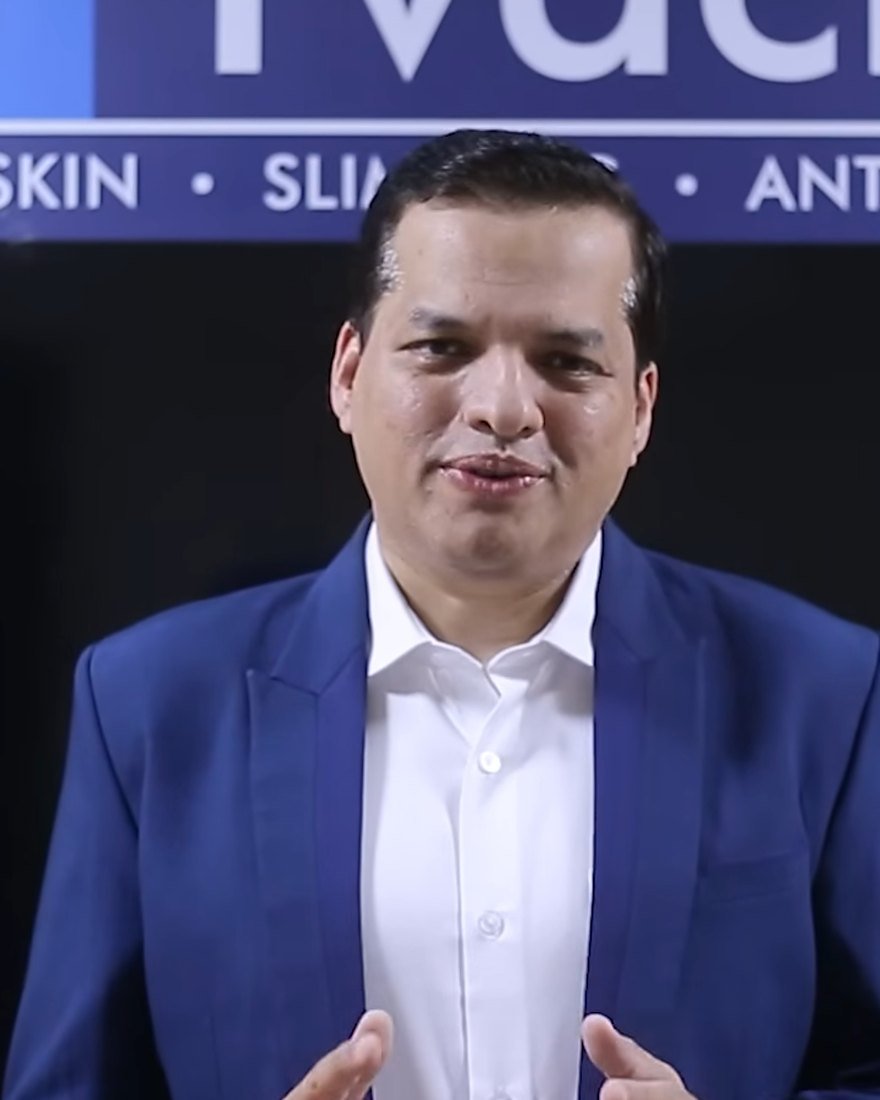
Dr Amit KarkhanisAesthetic Physician · MBBS, Dip. Dermatology (UK) · Reg. No. 2001/02/1124Founder of Dr Tvacha, practising in Thane since 2005. Leads the weight loss and hair programmes.
Sources
- Clinical and histological results evaluation of an innovative Erbium:YAG laser technology for facial rejuvenation (Trelles et al., Cirugía Plástica Ibero-Latinoamericana, 2018)
- Treatment of chronic lower extremity ulcers with Er:YAG laser and RecoSMA technology (Hernández et al., Cirugía Plástica Ibero-Latinoamericana, 2015)
- Laser resurfacing (Mayo Clinic)
- Laser resurfacing (DermNet)
This article is for general education and does not replace a consultation. Medicines and treatments are prescribed only after a doctor's assessment. Last reviewed 25 October 2026.