
Key takeaways
- Lasers are good at skin-quality problems: fine lines, uneven texture, sun damage, some spots.
- The stronger the laser, the bigger the change and the longer the recovery.
- Fractional lasers treat tiny columns of skin, which shortens healing but usually means more sessions.
- In Indian skin, the main risk is darker patches afterwards. Preparation and sunscreen reduce that risk.
- Lasers do not tighten heavy sagging or replace lost volume.
How does a laser improve fine lines?
People imagine a laser "burning off" wrinkles. That is not quite it.
See, what happens is, the laser delivers energy that damages the skin in a controlled way. The skin responds as it does to any small injury: it repairs itself, and part of that repair is new collagen. Over weeks to months, the surface becomes smoother and the fine lines soften. The Mayo Clinic describes ablative lasers as removing the outer layer while heating the layer below to boost collagen.
So the laser does not do the work. Your skin does. The laser only gives the instruction. That is very important to understand, because it explains why results take time and why two people with the same treatment get different results.
What types of lasers are used?
| Type | How it works | Typical recovery | Best for |
|---|---|---|---|
| Ablative (for example CO2, Erbium) | Removes the surface layer and heats below | New skin in about 7 to 10 days; full recovery a month or more (Mayo Clinic) | More marked lines, sun damage, scars |
| Non-ablative | Heats the deeper layer, leaves the surface intact | Hours to a day or two | Mild lines, early texture change |
| Fractional (either type) | Treats microscopic columns, leaves skin in between untouched | Shorter than full resurfacing | Balance of result and downtime |
Mayo Clinic notes that most people need two to four non-ablative treatments spaced over weeks or months, and that results build gradually. DermNet notes that sun-related lines around the eyes and lips respond particularly well.
At our centres we use laser-based rejuvenation including RecoSMA, which is an Erbium technique that splits the beam into many micro-beams. I have written about it separately in RecoSMA laser rejuvenation.
What can lasers not do?
I say this in almost every consultation. Basically, there are three different reasons a face looks older: 1. Skin quality: fine lines, texture, spots, dullness. Lasers help here. 2. Movement lines: lines that appear when you frown, squint or raise your brows. These respond better to anti-wrinkle injections (botulinum toxin). See crow's feet and forehead lines. 3. Support: loss of fat, bone and firmness, leading to hollows, jowls and folds. Lasers do very little here.
The Mayo Clinic states plainly that laser resurfacing does not tighten sagging skin. DermNet says lasers give a mild lifting effect but do not replace a facelift. If your main problem is support, I will tell you, because a laser alone will disappoint you.
Is laser safe for Indian skin?
It can be, with care. But I will not pretend the risk is the same as in very fair skin.
Mayo Clinic and DermNet both note that people with brown or darker skin have a higher risk of lasting colour changes after laser. In Indian skin, the common problem is post-inflammatory pigmentation: dark patches that appear a few weeks after treatment, especially if the skin is exposed to sun.
What I do to reduce that risk: - Avoid treating tanned skin. If you have just come back from a beach holiday, we wait. - Prepare the skin beforehand when needed, particularly if there is existing pigmentation. - Use conservative settings, sometimes with a test area first, as DermNet recommends. - Prefer fractional or gentler approaches over aggressive resurfacing in most brown skin. - Insist on daily sunscreen afterwards, through the Mumbai summer and the monsoon. Cloud cover does not stop ultraviolet light.
Who should avoid laser treatment?
According to the Mayo Clinic, laser resurfacing is not advised for everyone, including people who are: - Pregnant or breastfeeding - Recently on isotretinoin (an acne medicine) - Prone to keloids - Prone to cold sores, unless an antiviral is planned
I also avoid lasers on active acne, infection, eczema flares, and in people with vitiligo, which DermNet lists as a contraindication because laser can trigger new pigment loss. Tell me about every medicine you take, including creams.
How do I prepare and look after my skin afterwards?
Before: - Avoid sun and tanning for several weeks. Mayo Clinic advises avoiding unprotected sun for up to two months before resurfacing. - Stop smoking if you can. It slows healing. - Pause strong actives such as retinoids and acids for a few days if I ask you to.
After: - Gentle cleanser and a plain moisturiser. - Sunscreen every day, reapplied if you are outdoors. - No scrubs, peels or picking at flaking skin. - Keep your head raised and use cool compresses if you swell, as DermNet suggests.
How long do laser results last?
After healing, results can last for years, according to the Mayo Clinic. But new sun exposure and continued ageing slowly undo them. Normally I plan lasers as a short course followed by maintenance, perhaps once or twice a year, rather than a single dramatic treatment. Small steps over years give a face that looks rested, not different.
How we approach this at Dr Tvacha
Laser therapy, including RecoSMA, is available at our centres in Thane, Andheri, Bandra and Dahisar. Within the Long Game Anti-ageing Plan, I first assess whether your concern is skin quality, movement or support, because that decides whether a laser is the right tool at all. You get the plan, number of sessions and fees in writing before starting. If waiting is the better choice, that is what I will recommend.
Frequently asked questions
How many laser sessions do I need for fine lines?
It depends on the laser and on your skin. Mayo Clinic notes that most people need two to four non-ablative treatments spaced over weeks or months, while a stronger ablative treatment may be done once with a longer recovery. In Indian skin I usually prefer a gentler series. I review progress with photographs rather than promising a fixed number upfront.
Can I go to work after a laser treatment?
After gentle non-ablative treatments, most people return to normal activities quickly, with some redness or swelling for a few hours to days. After ablative resurfacing, new skin takes about a week or more to form, and full recovery takes longer. I plan treatment around your work and family events, so you are not caught out before an important day.
Will laser make my skin darker?
It can, which is why I take it seriously. Brown skin is more prone to dark patches after any laser. The risk is lower with careful settings, treating only untanned skin, preparing pigment-prone skin, and strict sunscreen use afterwards. If dark patches do appear, they usually need treatment and patience. Tell us early rather than waiting.
Is a laser better than a chemical peel for texture?
Neither is better for everyone. Peels and lasers both resurface the skin to different depths. Peels can suit superficial dullness and some pigmentation, while lasers may give more control for fine lines and texture. Both carry pigment risks in brown skin. I choose based on your skin, your concern and your downtime, and sometimes use both at different times.
Do lasers help sagging cheeks or jowls?
Not much. Lasers mainly improve the skin surface and fine lines. Mayo Clinic states that laser resurfacing does not tighten sagging skin. If the main problem is looseness or lost volume, other approaches such as radio frequency, support from fillers, or a surgical opinion may be more honest options. I tell you which category your concern falls into.
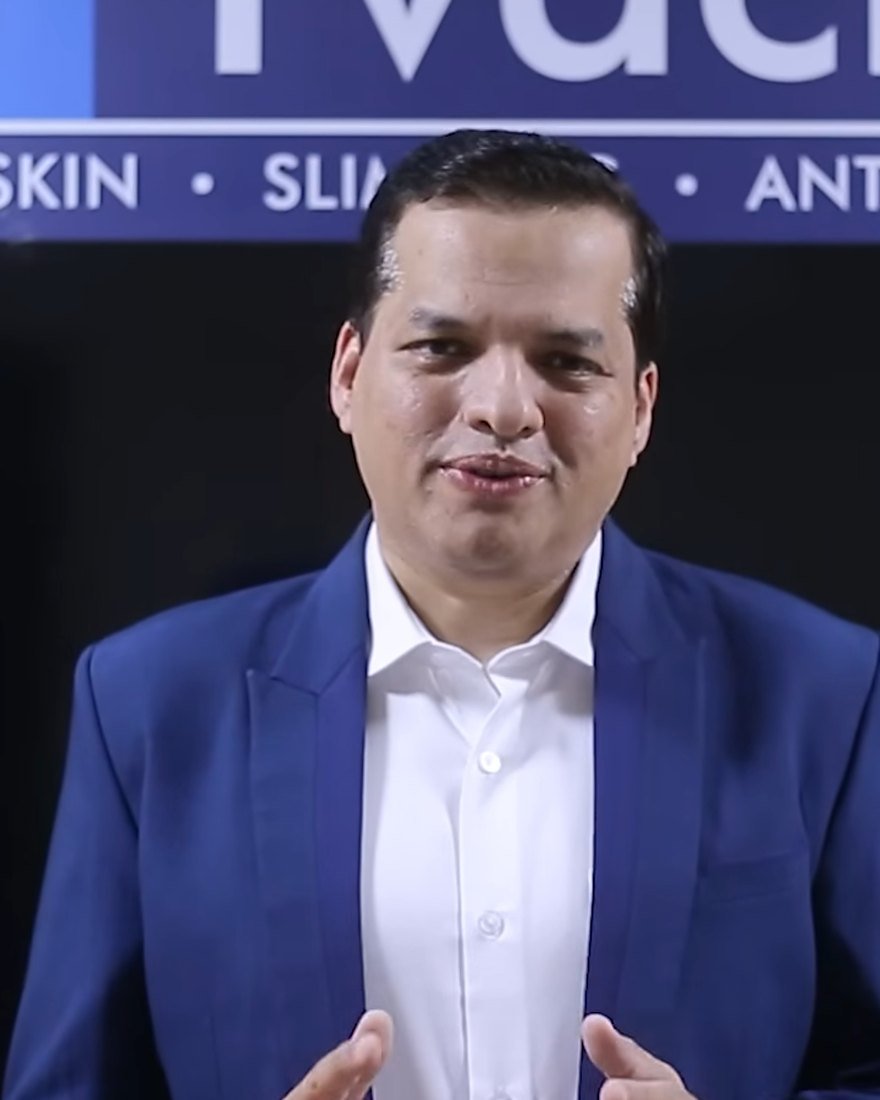
Written by
Dr Amit KarkhanisAesthetic Physician · MBBS, Dip. Dermatology (UK) · Reg. No. 2001/02/1124Founder of Dr Tvacha, practising in Thane since 2005. Leads the weight loss and hair programmes.
Sources
- Laser resurfacing (Mayo Clinic)
- Laser resurfacing (DermNet)
- Wrinkles: diagnosis and treatment (Mayo Clinic)
- Clinical and histological results evaluation of an innovative Erbium:YAG laser technology for facial rejuvenation (Trelles et al., 2018)
This article is for general education and does not replace a consultation. Medicines and treatments are prescribed only after a doctor's assessment. Last reviewed 25 October 2026.