
Key takeaways
- Radio frequency heats the dermis, the deeper skin layer, while the surface is protected or only lightly treated.
- There are different types: some reach deeper, some are more controlled, some use fine needles.
- Most types need a course of sessions, often three to six, depending on the device.
- It suits mild laxity and skin quality; it does not replace volume support or surgery.
- Operator skill and settings matter, and long-term studies are limited.
How does radio frequency tighten skin?
See, what happens is, radio frequency (RF) devices pass an alternating electrical current through the skin. Tissue resists that current, and the resistance turns into heat. It is the same reason a wire warms up when current flows.
A 2025 review in Health Science Reports explains the steps: - Immediate effect. Heat disturbs the bonds holding collagen fibres in shape, so they contract a little straight away. - Delayed effect. The controlled heat injury triggers a healing response, and the body lays down new collagen and elastin over the following weeks and months.
The review notes that collagen changes happen at certain temperature ranges, and that lower temperatures held for longer may reduce the risk of burns. That is why good RF treatment is about steady, controlled heating, not maximum power.
What are the different types of radio frequency?
| Type | How it works | Depth (per the 2025 review) | Typical sessions |
|---|---|---|---|
| Monopolar | One treatment tip plus a grounding pad on the body | Deepest, up to about 20 mm | 1 to 2 |
| Bipolar | Both electrodes on the skin, current runs between them | About 1 to 4 mm | 3 to 6 |
| Multipolar or fractional | Three or more electrodes, or a grid of points, leaving untreated islands that help healing | About 0.5 to 3 mm | 3 to 4 |
| RF microneedling | Fine needles deliver the energy inside the skin | Varies with needle depth | A course, set by the doctor |
Normally deeper monopolar treatment is felt more and depends heavily on operator skill. Bipolar treatment is more controlled and comfortable but reaches less deep. Microneedling versions combine the effect of tiny needle channels with heat, and are also used for acne scars and texture.
What can it help with?
- Mild looseness of the skin on the cheeks, jawline and under the chin
- Fine lines and crepey texture
- Early softening of the jawline
- Acne scarring and texture, particularly with microneedling or fractional types
The 2025 review collects study results such as improvement around the eyes, reduced wrinkle area and reduced acne scar volume. But it also lists the limits honestly: short follow-up in many studies, often three months or less, inconsistent protocols, operator dependence and incompletely understood mechanisms. That is very important to understand. RF can help, but the size of the effect varies, and it is modest.
Who is it not right for?
- People with heavy sagging or deep jowls, who usually need surgery for a real change
- People whose main problem is volume loss, which needs support rather than tightening
- Anyone with active infection, open wounds or a flare of skin disease in the area
- Pregnancy, and people with implanted electronic devices, unless the doctor confirms it is safe for that device
- Anyone expecting an instant result
The 2025 review states RF is suitable for all skin types but does not provide data by skin type to support that. In Indian skin, I am careful with settings, particularly with microneedling, because inflammation can leave dark marks.
What does a session feel like?
Most non-needle RF feels like a warm massage that becomes hot in places. Monopolar treatment can be more intense. Microneedling RF is done after numbing cream, and leaves the skin red, sometimes with pinpoint bleeding, for a day or so.
After treatment: - Redness and warmth, settling within hours for most non-needle treatments - Mild swelling, sometimes for a day or two - Pinpoint marks or crusting after microneedling, settling over days - Rarely, burns or blisters, more likely with poor technique or excessive settings
Sun protection afterwards matters, especially after microneedling.
Where does Intragen fit?
Intragen is a radio frequency based treatment available at our centres. It works on the same principle described here: controlled heating of the deeper skin to encourage new collagen. I explain it separately in Intragen explained.
How do I know if it worked?
Basically, change comes slowly, so judging day by day is not useful. Collagen builds over weeks and months, and a dermatologic surgeon quoted by MDedge notes energy-based tightening can take around six months to show its effect. A 2017 review of deep-heating devices also points out that patients often rate their improvement higher than doctors do, so a consistent review method helps. I review at the end of the course and again a few months later, in the same light and position, to decide whether a maintenance session makes sense. Some people choose to repeat occasionally. Some decide the change was not worth it for them, and that is a valid conclusion.
How we approach this at Dr Tvacha
Radio frequency skin tightening and contouring, Intragen and HIFU are available at our centres in Thane, Andheri, Bandra and Dahisar. The Rs 499 face assessment checks whether loose skin is really your main issue, and whether it is mild enough for energy-based treatment to help. The plan, number of sessions and price are written down before you start. Read about the Long Game Anti-ageing Plan, the comparison in HIFU vs radio frequency, or how skin ages.
Frequently asked questions
How many radio frequency sessions will I need?
It depends on the device. A 2025 review describes one to two sessions for deeper monopolar RF, three to six for bipolar and three to four for multipolar types. Microneedling RF is usually a course set by the doctor. I write the number of sessions and the price down before you start, and review at the end rather than adding sessions automatically.
Is radio frequency safe for Indian skin?
It can be, with care. Non-needle RF heats the deeper skin while the surface is protected, which helps. Microneedling and aggressive settings carry more risk of inflammation and dark marks in Indian skin. Conservative settings, good technique and strict sun protection afterwards reduce that risk. Tell your doctor if you pigment easily.
When will I see the results of radio frequency?
Some people notice a slight firmness soon after a session, from the immediate contraction of collagen. Most of the change comes gradually over weeks and months as new collagen forms. That is why I review at the end of the course and again later, rather than judging the result after one session.
Is radio frequency the same as HIFU?
No. Both heat tissue to tighten it and build collagen, but radio frequency uses electrical current while HIFU uses focused ultrasound. HIFU reaches precise deep points, including the deeper support layer, in usually one session. Many RF types work more on the skin and need a course. My comparison article explains which suits whom.
Can I have radio frequency with fillers or anti-wrinkle injections?
Often, yes, as part of a planned sequence. RF works on skin quality and mild laxity, fillers on support and anti-wrinkle injections on movement lines. The order and gap between them matter, so plan them at the assessment rather than doing everything on one day. Your doctor will advise the timing for your face.
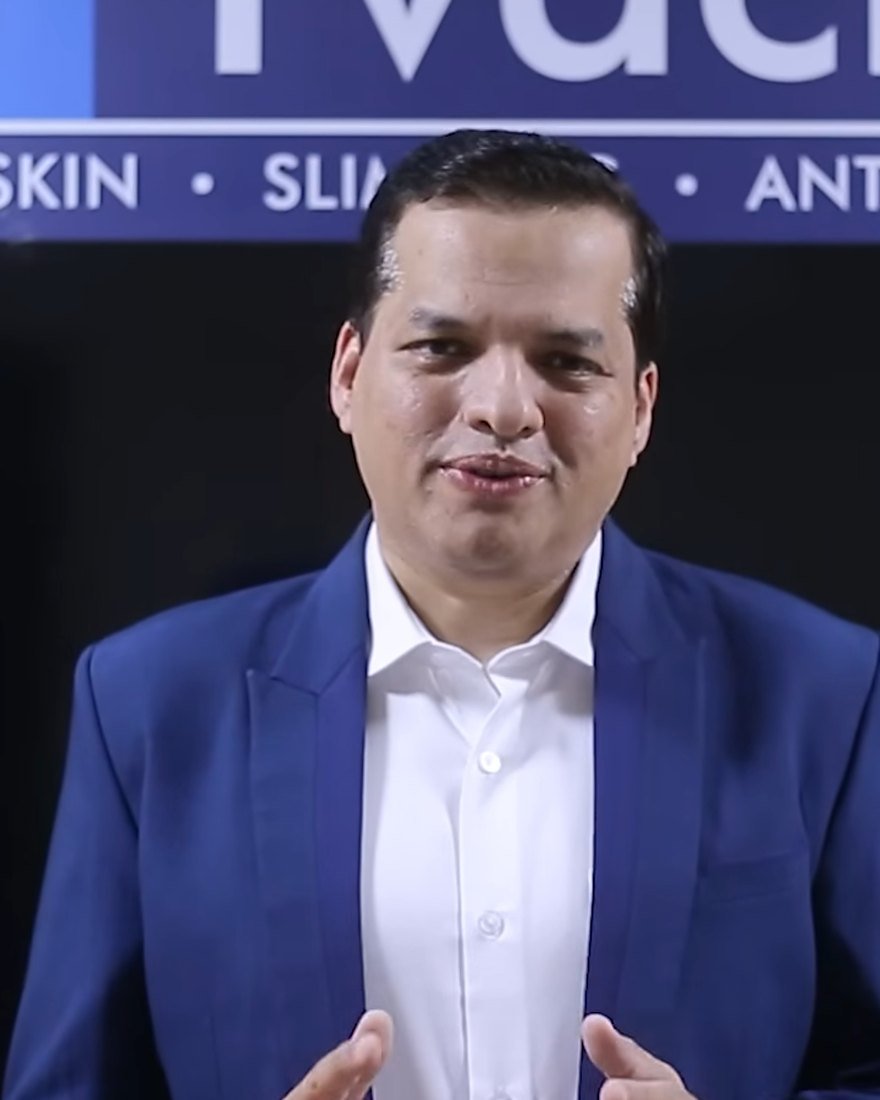
Written by
Dr Amit KarkhanisAesthetic Physician · MBBS, Dip. Dermatology (UK) · Reg. No. 2001/02/1124Founder of Dr Tvacha, practising in Thane since 2005. Leads the weight loss and hair programmes.
Sources
- The Landscape of Radiofrequency Technology for Skin Rejuvenation (Health Science Reports, 2025)
- "Deep Heating" Noninvasive Skin Tightening Devices: Review of Effectiveness and Patient Satisfaction (Journal of Drugs in Dermatology, 2017)
- Thread lifts making a comeback, but long-term effects remain unclear (MDedge, 2019)
This article is for general education and does not replace a consultation. Medicines and treatments are prescribed only after a doctor's assessment. Last reviewed 25 October 2026.