
Key takeaways
- PRP and GFC are made from your own blood, so allergic reactions to the solution itself are unlikely. The main side effects are pain, bruising and temporary tenderness.
- A 2024 meta-analysis of 13 randomised trials found PRP increased hair density compared with placebo, but rated the certainty of evidence as low.
- Preparation methods differ a lot between clinics and studies, which makes results hard to compare.
- The American Academy of Dermatology notes PRP is not a one-time treatment. Maintenance sessions are needed to keep results.
- At Dr Tvacha, PRP and GFC are available if they suit you, but they are not the centrepiece of the plan.
What is the difference between PRP and GFC?
People often ask for PRP by name, because a friend had it. I'm happy to discuss it. But first, let me explain what it actually is. Both start with a small sample of your blood, drawn like a routine blood test. The difference is in how it is processed.
| PRP (platelet-rich plasma) | GFC (growth factor concentrate) | |
|---|---|---|
| What it is | Plasma with a higher concentration of platelets than normal blood | A preparation in which platelets are activated so their growth factors are released before injection |
| How it is made | Blood is spun in a centrifuge to separate the platelet-rich layer | Blood is processed with a dedicated kit intended to release and concentrate growth factors |
| What is injected | Platelets, which then release growth factors in the scalp | Mainly the released growth factors |
| Evidence base | More studies, including randomised trials | Fewer studies, mostly small and recent |
A 2025 study in Dermatologic Surgery compared the two in men and women with pattern hair loss and reported that GFC produced quicker improvement, while PRP gave more sustained benefit after treatment. That is a single study, so it is too early to say one is clearly better.
How is it supposed to work?
Platelets are best known for clotting, but they also carry proteins called growth factors, which help tissues repair. See, what happens is, the idea is to concentrate these growth factors and place them near thinning follicles, where they may prolong the growing phase of hair and support miniaturised follicles. The exact mechanism in the scalp is still being studied.
It also matters to understand what PRP is not. It does not block DHT, the hormone that drives male and female pattern hair loss. That is why it is generally used alongside medicines that act on the cause.
What does the research show?
For PRP: A 2024 systematic review and meta-analysis in Anais Brasileiros de Dermatologia pooled 13 randomised trials with 431 participants. Compared with placebo, PRP increased hair density by an average of about 27.5 hairs per square centimetre. But heterogeneity between studies was very high, publication bias was likely, and the certainty of evidence was rated low. The authors concluded PRP appears to increase density, and that more high-quality trials are needed.
DermNet lists PRP as still under investigation for pattern hair loss, and the American Academy of Dermatology describes it as something that can reduce hair loss within a few months, with some people seeing thickening or regrowth.
For GFC: The evidence is earlier. Small studies, including the 2025 comparison above, report improvement, but there are not yet large controlled trials.
Why results vary so much: - Different centrifuge speeds and kits produce very different platelet concentrations. - Some preparations are activated, some are not. - Session numbers, intervals and injection techniques vary. - Many trials are small and short.
That is very important to understand. When a clinic says "PRP", it is not one standard product.
What does a session involve, and how many are needed?
A typical session: 1. Blood is drawn from your arm. 2. It is processed, which takes a short while. 3. The scalp is cleaned, and numbing may be used. 4. The solution is injected in small amounts across the thinning area.
The American Academy of Dermatology describes a common schedule: monthly sessions for the first three months, then maintenance every three to six months. Hair can usually be washed the next day. Mild soreness, a feeling of tightness and small bruises are common for a day or two. I won't pretend it is comfortable. I don't enjoy injections myself.
Who should avoid PRP or GFC?
These treatments are not for everyone. Discuss with your doctor if you: - Have a blood or platelet disorder, or take blood thinners - Have an active scalp infection or skin condition at the treatment site - Are pregnant - Have a history of fainting with blood tests or injections - Have a recent or active serious illness
Simple shedding after a fever or childbirth usually recovers without any procedure. Read sudden hair shedding.
Is it worth it?
It depends on your diagnosis, your budget and your expectations. PRP or GFC may be worth considering if you have pattern thinning with fine hairs still present, you are already on medicines, and you understand that sessions need repeating. It is unlikely to be worth it as a stand-alone answer, or for areas that have been bald for many years. That is your call. I'll tell you what I would do in your situation.
Other in-clinic options deliver growth factors in different ways. Laser-assisted delivery and mesotherapy apply growth-factor and peptide solutions through micro-channels or fine injections. The evidence for these is also early. A 2017 systematic review of mesotherapy for pattern hair loss found it promising and without significant side effects, but it included only five studies, all rated poor quality. The same honesty applies there. Read laser treatment for hair loss for that evidence.
How we approach this at Dr Tvacha
My in-clinic course does not depend on PRP. The 5-Year Time Machine Hair Plan uses monthly sessions of about 20 minutes with a growth-factor and peptide solution, delivered with an Erbium laser or by mesotherapy, over four months, alongside home medicines. PRP and GFC are available when they genuinely suit your situation, and the choice is yours. Everything starts with a Rs 499 hair diagnosis at our Thane, Andheri, Bandra or Dahisar centre, and fees are given in writing before you pay. See our hair page.
Frequently asked questions
Does PRP hurt?
It involves many small injections in the scalp, so most people feel some discomfort, mostly stinging and pressure. Numbing cream, cooling or a nerve block may be used, depending on the clinic. The scalp can feel sore and tight for a day or two afterwards. Discomfort varies between people, so ask your clinic how they manage it before you book.
How long do PRP results last?
PRP does not change the underlying cause of pattern hair loss, so any benefit fades over time without maintenance. The American Academy of Dermatology describes maintenance sessions every three to six months after an initial monthly course. How long results last varies between people, and also depends on whether you continue medicines that act on the cause.
Can PRP replace minoxidil or finasteride?
Not on current evidence. PRP and GFC are best used as add-ons. Minoxidil and finasteride have a larger body of evidence and act continuously, while PRP is given every few months. Basically, dropping proven medicines for PRP alone usually means losing ground. Any change to prescription medicines should be discussed with your doctor first.
Is GFC better than PRP?
It is too early to say. GFC is a newer way of preparing growth factors from your own blood, and one 2025 study reported quicker improvement with GFC and more sustained benefit with PRP. That is a single study. Both are add-on treatments with limited evidence, and the right choice depends on your diagnosis and your preference.
Can PRP help after a hair transplant?
Some surgeons use PRP around transplant surgery, and the American Academy of Dermatology notes transplants can be combined with PRP. The evidence is still developing. What matters more after a transplant is protecting the hair you already have with the right medicines, because a transplant does not stop pattern hair loss progressing in the surrounding hair.
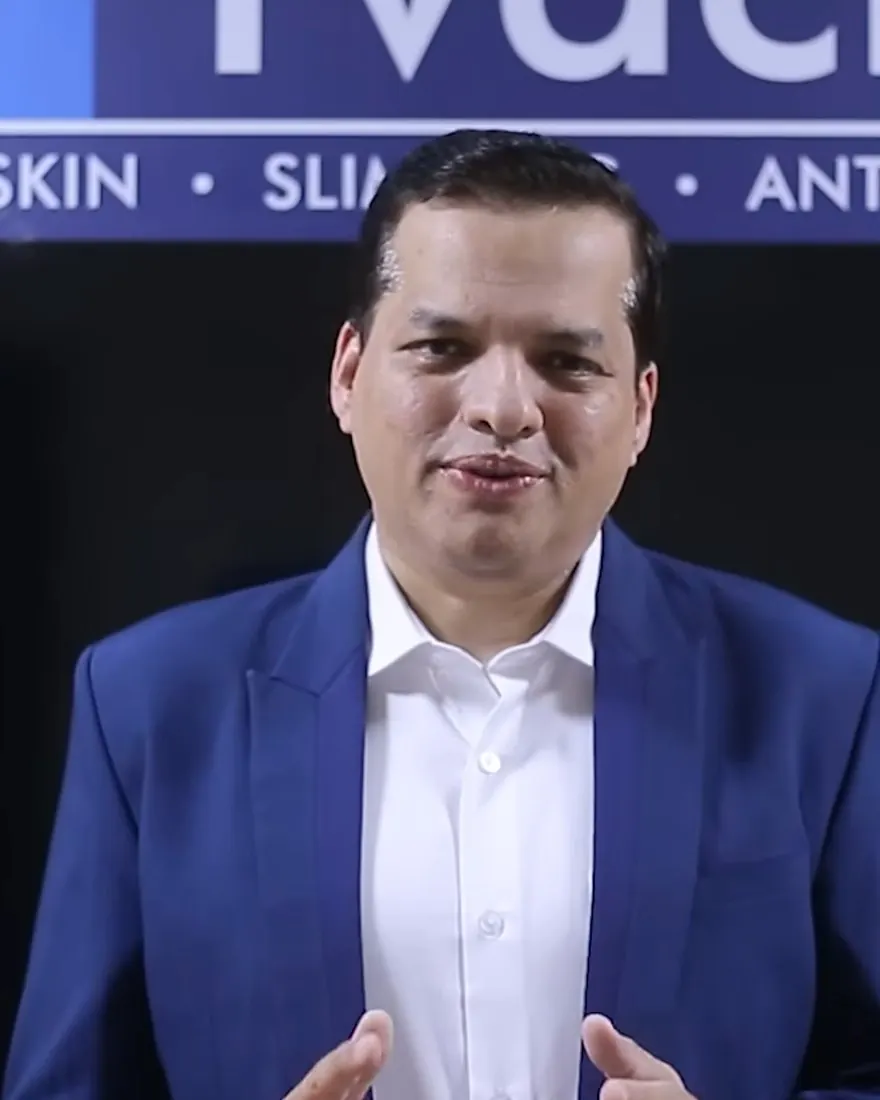
Written by
Dr Amit KarkhanisAesthetic Physician · MBBS, Dip. Dermatology (UK) · Reg. No. 2001/02/1124Founder of Dr Tvacha, practising in Thane since 2005. Leads the weight loss and hair programmes.
Sources
- Is autologous platelet-rich plasma capable of increasing hair density in patients with androgenic alopecia? A systematic review and meta-analysis (Anais Brasileiros de Dermatologia, 2024)
- What is male pattern hair loss, and can it be treated? (American Academy of Dermatology)
- Male pattern hair loss (DermNet)
- Clinical and Trichoscopic Analysis of PRP Versus GFC for Male and Female Pattern Hair Loss (Dermatologic Surgery, 2025, summary)
- Safety and Efficacy of Mesotherapy in the Treatment of Androgenetic Alopecia: A Systematic Review (Health Technology Assessment in Action)
This article is for general education and does not replace a consultation. Medicines and treatments are prescribed only after a doctor's assessment. Last reviewed 25 October 2026.