
Key takeaways
- "Laser for hair" can mean very different things: in-clinic fractional lasers, or low-level light devices for home use.
- Fractional erbium lasers are mainly used for laser-assisted drug delivery, combined with minoxidil or growth-factor solutions.
- A 2024 review of 18 studies found combining lasers with drug treatments may improve results, but there are no large, high-quality trials yet.
- I do not recommend home laser caps or devices. At Dr Tvacha, lasers are used only as part of a supervised plan.
- Laser is an add-on to diagnosis and medicines, not a shortcut around them.
What kinds of laser are used for hair loss?
I have loved technology since my ZX Spectrum days, and lasers became my field because of that. So you would expect me to be the biggest fan of laser for hair. I am a fan, but an honest one. First, let us be clear what "laser" even means here.
| Type | How it works | Where it is used | State of evidence |
|---|---|---|---|
| Ablative fractional laser (for example erbium:YAG, 2940 nm) | Makes thousands of microscopic channels in the top layers of the scalp | In-clinic, by trained staff under a doctor | Small randomised trials and case series, mostly combined with minoxidil or other solutions |
| Non-ablative fractional laser (for example erbium glass, 1550 nm) | Creates tiny heated columns without breaking the surface | In-clinic | Small studies, often combined with growth factors |
| Low-level laser or LED light | Shines low-energy light on the scalp to stimulate cells | Home caps, combs and helmets | Mixed results; DermNet describes the benefit as unproven |
The first two are what most clinics mean by laser hair treatment. They are not the same as laser hair removal, which uses different wavelengths to destroy follicles.
How does a fractional laser help hair?
See, what happens is this. The outer skin of the scalp is a very good barrier. That is why only a small fraction of any lotion you apply actually reaches the follicle. A fractional laser creates a grid of microscopic channels, each far narrower than a hair, while leaving the surrounding skin intact. Two things follow:
- Better delivery. A growth-factor, peptide or minoxidil solution applied straight afterwards can pass through these channels more easily. We call this laser-assisted drug delivery.
- A healing signal. The controlled micro-injury triggers the skin's repair response, which researchers think may also stimulate follicles.
The scalp usually looks slightly pink for a short while afterwards as it heals.
What does the research actually show?
Being honest about evidence matters more to me than sounding impressive. Here is what we know.
- The broad picture. A 2024 review in Lasers in Medical Science looked at 18 human studies from 2018 to 2022 on laser and energy-assisted drug delivery for hair loss. The authors concluded that traditional drug treatments can be combined with laser treatments "for an augmented effect", but that there are no large, high-quality randomised trials, and that bigger studies are needed.
- Erbium:YAG with minoxidil. A 2023 randomised trial of 30 men with moderate to severe androgenetic alopecia compared minoxidil 5% alone with minoxidil plus six sessions of fractional erbium:YAG laser. Both groups improved. The laser group scored better on dermoscopy, but photographic scores were not significantly different. The authors suggested laser may improve delivery of minoxidil, with slightly better outcomes.
- Erbium glass with growth factors. A 2018 case series in the Journal of Cosmetic and Laser Therapy treated four patients with a non-ablative erbium glass laser followed by topical growth factors and other solutions, and reported improved density in all four, with no significant side effects. Four uncontrolled cases cannot prove anything, but they show why this combination is being studied.
So, in short: the signal is promising, the studies are small, and "combination" is the key word.
Why don't I recommend home laser caps?
Low-level laser and LED devices for home use are widely sold, and some have regulatory clearance in other countries, which the American Academy of Dermatology notes requires less scrutiny than full approval. Some small studies report improved density, but DermNet describes their benefit as unproven, and long-term data are limited.
I do not believe in home laser caps or devices, and I do not recommend them. There is also a practical problem I see with any home device. It is often bought instead of a diagnosis, used without the medicines that have stronger evidence, and continued for months without anyone checking whether it is helping. If you already own one, bring it up at your consultation rather than relying on it alone. I won't make you feel bad about it.
Who is laser treatment suitable for?
In-clinic laser, as part of a plan, is most worth considering if: - You have male or female pattern thinning where fine hairs are still present. - You are already using, or willing to use, home medicines. - You want an in-clinic component that a doctor reviews each month.
It is less suitable, or needs caution, if: - Your hair loss is simple shedding after illness or childbirth, which usually recovers on its own. - You have an active scalp infection, open wounds, or a tendency to keloid scarring. - You are pregnant, or the scalp area is completely bald and smooth.
Laser does not change the cause of pattern hair loss. Like other treatments, any benefit is kept only while the overall plan continues. Read will my hair grow back for what treatment can and cannot do.
What does a session involve?
At most clinics, a session takes around 20 minutes. The scalp is cleaned, the laser is passed over the thinning area, and a solution is applied. Most people describe a warm, prickling sensation. Mild redness for a few hours is common. Hair can usually be washed the next day. Ask your clinic for its specific aftercare.
How we approach this at Dr Tvacha
I invested in lasers early, when few clinics had them, but I use them as one part of a plan, never alone. In the 5-Year Time Machine Hair Plan, each monthly in-clinic session of about 20 minutes uses either an Erbium laser or mesotherapy to deliver a growth-factor and peptide solution, over four months, alongside home medicines. Whether laser suits you is decided at a Rs 499 hair diagnosis at our Thane, Andheri, Bandra or Dahisar centre, and fees are given in writing. The choice is yours. See our hair page, or compare with PRP and growth factor treatments.
Frequently asked questions
Does laser treatment for hair loss hurt?
Most people describe it as warm and prickly rather than painful, and sessions are short. Sensitivity varies with the type of laser, the settings and your own scalp. A numbing cream is sometimes used. Mild redness and tenderness for a few hours afterwards is common. If it feels uncomfortable during the session, tell the team so the settings can be adjusted.
How many laser sessions are needed?
Studies have used different schedules, often several sessions spaced weeks apart, so there is no single standard. In practice, I combine laser with home medicines over at least a few months, followed by a maintenance plan. Hair grows slowly, so results are judged over months, not after one or two sessions. Review dates should be set at the start.
Is laser better than minoxidil?
They do different jobs, so I see them as partners. Minoxidil has a much larger body of evidence for pattern hair loss. Fractional laser is mainly used to help solutions like minoxidil or growth factors reach the follicle. The 2023 trial comparing minoxidil alone with minoxidil plus laser found both groups improved, with slightly better dermoscopy scores in the combined group.
Can laser treatment damage hair follicles?
Hair-regrowth lasers use different settings and wavelengths from laser hair removal, which is designed to destroy follicles. Fractional lasers used for hair create microscopic channels in the upper skin and, in the studies reviewed, were generally well tolerated. As with any procedure, wrong settings can cause burns or irritation, so treatment should be done by trained staff under a doctor.
Can women have laser treatment for hair loss?
Yes. Women with female pattern hair loss can be suitable, and some studies included women. It is avoided in pregnancy. If your thinning is linked to PCOS, thyroid problems or low iron, those need attention too, because laser does not treat the underlying cause. A diagnosis first makes sure the laser is being used for the right problem.
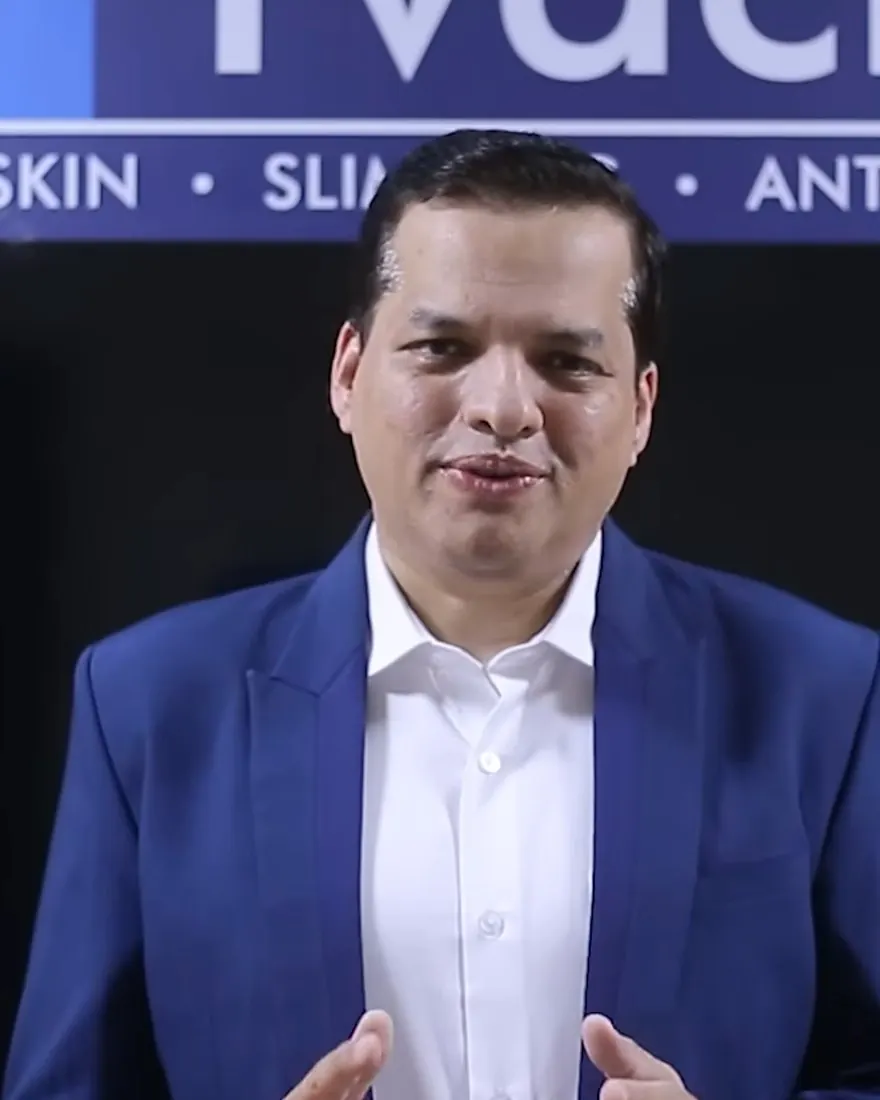
Written by
Dr Amit KarkhanisAesthetic Physician · MBBS, Dip. Dermatology (UK) · Reg. No. 2001/02/1124Founder of Dr Tvacha, practising in Thane since 2005. Leads the weight loss and hair programmes.
Sources
- The role of laser and energy-assisted drug delivery in the treatment of alopecia (Lasers in Medical Science, 2024)
- Topical 5% minoxidil versus combined erbium YAG laser and topical 5% minoxidil in androgenetic alopecia: a randomized controlled trial (2023)
- Fractional non-ablative laser-assisted drug delivery leads to improvement in male and female pattern hair loss (Journal of Cosmetic and Laser Therapy, PubMed)
- Laser-assisted drug delivery is effective in alopecia but lacks comparison with existing treatments (AJMC)
- Male pattern hair loss (DermNet)
- What is male pattern hair loss, and can it be treated? (American Academy of Dermatology)
This article is for general education and does not replace a consultation. Medicines and treatments are prescribed only after a doctor's assessment. Last reviewed 25 October 2026.