Key takeaways
- Lasers work by matching a wavelength to a target: melanin (pigment and hair), haemoglobin (redness and vessels), water (resurfacing and scars) or ink (tattoos).
- Broadly, there are lasers for hair, for pigment, for redness, and resurfacing lasers for scars, texture and fine lines.
- Ablative lasers (CO2, erbium) remove thin layers of skin and need more downtime. Non-ablative and fractional approaches heat the skin with less downtime but need more sessions.
- Brown skin needs extra caution, because laser can cause darkening or lightening that may last a long time, especially with stronger resurfacing settings.
- Ask what the laser is targeting in your skin, how many sessions, what downtime, and what the plan is if your skin darkens.
How does a laser know what to treat?
See, what happens is, laser light is one pure wavelength. Different things in the skin absorb different wavelengths. Melanin in pigment and hair roots absorbs some. Haemoglobin in blood vessels absorbs others. Water, which is in every skin cell, absorbs the far infrared. Tattoo ink absorbs depending on its colour. The skill is in choosing the wavelength, the pulse length and the energy so the target heats up and the surrounding skin stays safe.
That is very important to understand in Indian skin. Our skin has more melanin in the surface layer. A laser aimed at a pigment spot or a hair root also "sees" the brown skin around it. If the settings are wrong, the surface skin gets heated too, and the result can be a burn, a dark patch or a pale patch.
Which laser does what?
This table is simplified from DermNet's overview of lasers in dermatology. The wavelengths are given in nanometres (nm).
| Main target | Common laser types | What it treats | Typical downtime |
|---|---|---|---|
| Hair root (melanin) | Long-pulsed Nd:YAG 1064 nm, diode about 810 nm, alexandrite 755 nm | Unwanted dark hair | Redness for a day or so |
| Pigment (melanin) | Q-switched or picosecond Nd:YAG 1064/532 nm, Q-switched alexandrite | Freckles, some sun spots, some birthmarks, tattoos | Mild redness, sometimes small crusts |
| Blood vessels (haemoglobin) | Pulsed dye laser 585 to 595 nm, KTP 532 nm | Broken capillaries, redness, some red scars | Possible bruising for one to two weeks with pulsed dye |
| Water (resurfacing) | CO2 10,600 nm, erbium (Er:YAG) 2940 nm, often fractional | Acne scars, texture, fine lines, sun damage | Several days to weeks, depending on strength |
In Indian skin, the longer wavelengths such as 1064 nm are often chosen because they pass the surface melanin more safely. The trade-off is that they can be less punchy on fine targets, so more sessions may be needed.
What is the difference between ablative, non-ablative and fractional?
- Ablative lasers, such as CO2 and erbium, vaporise very thin layers of skin. The skin then heals with new collagen. DermNet describes pulsed CO2 as a long-standing standard for facial resurfacing, with erbium giving similar results. Healing takes time, and redness can last for weeks.
- Non-ablative lasers heat the deeper skin without breaking the surface. Downtime is less, but you need a series of sessions for a smaller change each time.
- Fractional lasers, ablative or not, treat the skin in tiny columns with untouched skin between them. The untouched skin helps healing, so downtime is shorter than full resurfacing.
For brown skin, I lean towards fractional and gentler settings, spaced well apart, even if it means more sessions. DermNet says extreme caution is needed with ablative lasers in skin of colour because long-term pigment loss or patchy pigment can occur. I would rather go slowly than deal with that.
Can a laser treat melasma or tan?
Patients often ask for "a laser for my pigmentation". Normally, my first question is: which pigmentation? A freckle or a single sun spot can respond well to a pigment laser. A tattoo needs several sessions. Melasma is different. It is driven by hormones, heat and light, and aggressive laser can make it worse or bring it back darker. DermNet notes that treatment of pigmented lesions is unpredictable and that treated lesions may recur.
So for melasma I start with sunscreen and creams, and use low-energy laser or peels only as a support, not the main plan. I have explained this in treating melasma safely in Indian skin. Tan is usually best handled with sun protection and time, with a peel if needed, before thinking of laser.
What are the risks of laser on Indian skin?
DermNet lists the general side effects of laser: temporary pain, redness, bruising, blistering and crusting; infection, including cold sores flaring up; pigment changes that may be permanent in some cases; and scarring. In skin of colour, pigment change is the one I watch most closely.
You can reduce the risk on your side too: - Do not come for laser with a fresh tan. A beach weekend or a long Mumbai summer on a two-wheeler counts. - Tell me about medicines, especially acne tablets, antibiotics and anything that makes you sun-sensitive. - Tell me if you get cold sores. Some resurfacing treatments need a preventive medicine. - Stop strong acids and retinoids on the area for a few days before, unless I say otherwise. - After treatment, use sunscreen every day and avoid scrubbing or picking.
What should I ask before any laser?
Basically, five questions: 1. What exactly is the laser targeting in my skin? 2. Why this laser and not another for my skin type? 3. How many sessions, how far apart, and what is the total cost in writing? 4. What downtime should I plan for at work? 5. If my skin darkens or reacts, what is the plan?
A good answer to the last question tells you a lot about the clinic. There is more on this in questions to ask before any skin treatment.
Where do lasers fit with peels and creams?
Lasers are tools, not a plan. For acne marks I usually start with creams and sunscreen. For acne scars, a resurfacing laser is often part of a combined plan with other treatments, which I compare in acne scar treatments compared. For hair, laser is the main tool. For melasma, it is a minor helper. Chess taught me to think from the end: I decide what result we want in six months, then pick the tool that gets there with the least risk to your skin.
How we approach this at Dr Tvacha
I have used lasers since early in my practice, because I have always loved technology, and laser therapy and laser hair reduction are part of our skin services. At a Rs 499 skin consultation I tell you what is causing the problem first, and only then whether a laser suits it. You get the laser, number of sessions and fee in writing before you pay. The plan follows Diagnose, Treat, Protect, Maintain, as set out on the Second Layer Skin Plan page. For laser options for fine lines and texture, see our anti-ageing plan.
Frequently asked questions
Which laser is right for Indian skin?
There is no single answer, because it depends on the problem. For hair, longer wavelengths such as Nd:YAG are commonly used on darker skin, and diode lasers with careful settings are also used. For pigment, Q-switched or picosecond lasers are used at gentle settings. For scars, fractional resurfacing is common. The settings and the operator's experience with brown skin matter as much as the type.
Is laser treatment safe for dark skin?
It can be, with care. The risks are higher in brown skin because the laser can also heat the surface melanin, causing burns, darkening or lightening. Choosing suitable wavelengths, using test spots, cooling the skin and not treating over a tan all reduce the risk. I would always choose a slower course with gentler settings over fast, aggressive treatment.
How many laser sessions will I need?
It varies by target. Hair reduction usually needs several sessions weeks apart. Tattoo removal often needs between two and ten. Pulsed dye laser for redness may need several sessions. Fractional resurfacing for scars is usually a series spaced a month or more apart. I give you an expected number and the total cost in writing after I have seen your skin.
Can I go to work after a laser session?
For hair reduction and gentle pigment or redness lasers, most people go back to work the same or next day with some redness. Fractional resurfacing usually needs a few days of visible redness and flaking. Full ablative resurfacing needs a longer break, sometimes weeks. I tell you the expected downtime before booking so you can plan around meetings or functions.
Does laser thin the skin?
No, laser treatments used correctly do not thin the skin. Resurfacing lasers in fact aim to build new collagen as the skin heals. What can harm the skin is too much energy, sessions too close together, or treating over a tan or irritated skin. That is why I space sessions properly and adjust settings to your skin each time.
Written by
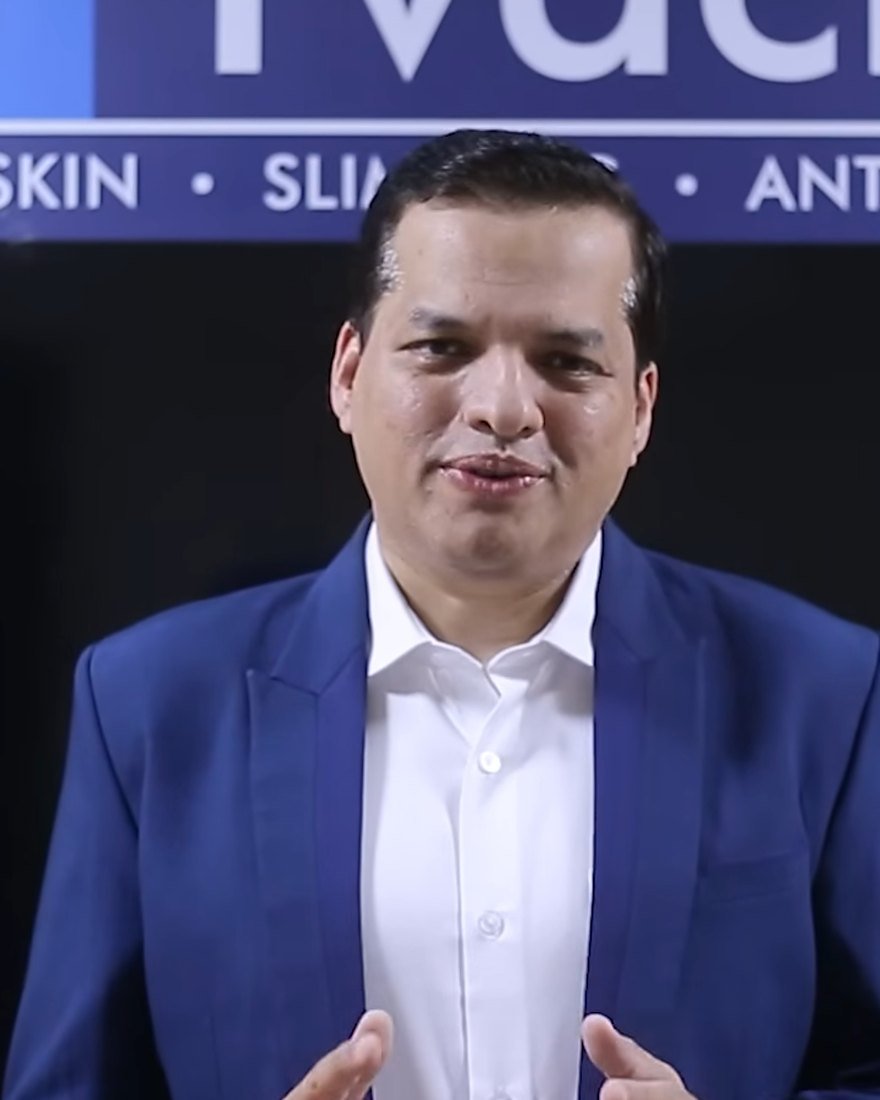
Dr Amit KarkhanisAesthetic Physician · MBBS, Dip. Dermatology (UK) · Reg. No. 2001/02/1124Founder of Dr Tvacha, practising in Thane since 2005. Leads the weight loss and hair programmes.
Sources
- Lasers in dermatology, DermNet
- Laser hair removal FAQs, American Academy of Dermatology
- Fayne RA et al. Laser and light treatments for hair reduction in Fitzpatrick skin types IV-VI. Am J Clin Dermatol 2018
- Sunscreen FAQs, American Academy of Dermatology
This article is for general education and does not replace a consultation. Medicines and treatments are prescribed only after a doctor's assessment. Last reviewed 25 October 2026.