
Key takeaways
- Different types of hair loss can look similar in the mirror but need very different treatment, so diagnosis comes before any product or procedure.
- Trichoscopy is non-invasive and needs no needles. It shows miniaturising hairs, signs of patchy hair loss, scarring and fungal infection.
- The history matters as much as the scope. Illness, diet, periods, medicines and family pattern in the past six months often point to the cause.
- Blood tests should be chosen for you, not taken as a large standard package.
- Baseline photos and notes make it possible to judge any treatment honestly later.
Why does a diagnosis matter so much?
People sometimes say, "Doctor, I don't need a diagnosis, I just have hair fall. Give me something for it." I'm happy to help. But "hair fall" is a symptom, not a diagnosis. At least five common conditions can bring you to my door with the same complaint:
| Condition | What it needs |
|---|---|
| Pattern hair loss (androgenetic alopecia) | Long-term medical treatment; sometimes surgery later |
| Sudden shedding (telogen effluvium) | Finding and fixing the trigger; often time and reassurance |
| Patchy hair loss (alopecia areata) | Treatment that calms the immune reaction |
| Traction alopecia | Changing hairstyles before scarring sets in |
| Scarring alopecias, fungal infection | Prompt, specific medical treatment |
Treating shedding after dengue with a long course meant for pattern loss wastes your money. Treating early scarring alopecia with a hair serum loses time you cannot get back. That is very important to understand, and it is why I value a proper diagnosis more than any product.
What will the doctor ask me? (Step 1: the history)
A good history usually covers:
- When it started and how: sudden shedding or slow thinning?
- The last six months: fever, dengue, typhoid, COVID, surgery, delivery, major stress, weight loss, a new diet.
- Family pattern: thinning in parents, grandparents or siblings.
- For women: periods, PCOS symptoms such as acne or excess facial hair, pregnancy, breastfeeding, contraceptive pills, perimenopause.
- Medicines and supplements: including gym products, hair vitamins and anything you stopped recently.
- Hair habits: tight hairstyles, helmets, chemical straightening, colouring, oiling.
- Scalp symptoms: itch, flaking, pain, burning or bumps.
Bring a list of everything you take and, if you have them, older photos of your hair. Old wedding or holiday photos are honestly very useful to me.
What does the examination show? (Step 2: scalp and hair)
I first look at the overall pattern: hairline, temples, parting width, crown, eyebrows, beard and nails. Then a closer look.
Trichoscopy. A trichoscope is a handheld or video dermatoscope. DermNet describes it as allowing examination of the scalp and hair at 20 to 160 times magnification. It is non-invasive: the scope rests on the scalp or just above it. No needles, no discomfort. Being a technology person, I enjoy this part, because it shows things the eye cannot:
- Miniaturisation: in pattern hair loss, follicles produce progressively thinner hairs, so the scope shows a mix of thick and fine hairs in the same area. DermNet notes that this helps tell early pattern hair loss from telogen effluvium.
- Yellow dots: follicle openings filled with keratin, seen in alopecia areata and pattern loss.
- Exclamation mark hairs: short hairs that taper towards the root, characteristic of alopecia areata.
- Signs of scarring: missing follicle openings and white areas, which suggest scarring alopecia and may need a biopsy.
- Unusual hair shapes: comma or corkscrew hairs, described in fungal scalp infection.
- Scalp condition: scaling, redness and inflammation from dandruff, seborrhoeic dermatitis or psoriasis.
The images can be saved and compared at follow-up visits, which DermNet also lists as an advantage.
Pull test. I gently pull a small bunch of hairs between my fingers. A StatPearls review notes that in active telogen effluvium, at least four hairs typically come away per pull. If the shedding has already stopped, the test may be normal.
Will I need blood tests? (Step 3: only where needed)
Blood tests are useful when your history or examination suggests a cause they can confirm. Common ones are a blood count, ferritin (iron stores), thyroid function and vitamin D, with hormone tests for women when PCOS is suspected. A large, fixed panel for everyone adds cost without adding much. See which blood tests matter for hair fall.
Occasionally I suggest a scalp biopsy, usually when scarring alopecia is suspected or the diagnosis is unclear. Trichoscopy helps choose the best spot for it.
What do I leave with? (Step 4: photos and a written plan)
Before any treatment starts, baseline photos should be taken in fixed light and from fixed angles: front hairline, both temples, top of the head with the hair parted, and the crown. These become the benchmark. My guide to tracking hair progress with photos explains how to do the same at home.
At the end, you should leave knowing: 1. What type of hair loss you have, in plain words. 2. Whether it is likely to recover by itself, needs treatment, or needs referral. 3. The options, including doing nothing, with their trade-offs. 4. What it will cost, in writing, before you decide. 5. When you will be reviewed, and how progress will be judged.
Basically, I want you to walk out understanding your own hair, whether or not you take any treatment from us.
What should I do before the appointment?
- Avoid oiling or heavy styling products on the day, so I can see the scalp clearly.
- Do not colour or chemically treat your hair in the week before.
- Wash your hair the day before or that morning, as you normally would.
- Bring your list of medicines, supplements and any earlier blood reports.
- Note the dates of any illness, surgery or major stress in the last six months.
How we approach this at Dr Tvacha
The Rs 499 hair diagnosis is the first step of the 5-Year Time Machine Hair Plan, available at our Thane, Andheri, Bandra and Dahisar centres, each with a private consultation room. Consultations are in English, Hindi or Marathi. If treatment is suitable, the option is matched to your diagnosis, the fee is given in writing before you pay, and review dates are fixed on day one. If a transplant is ever discussed, it is quoted in writing after diagnosis with the name of the qualified surgeon who will perform it. Whether you go ahead is your call.
Frequently asked questions
Is trichoscopy painful?
No. It is a non-invasive examination. I place a small magnifying scope on or just above your scalp and look at the follicles and hair shafts, sometimes on a screen. There are no needles, no chemicals and no recovery time, so you can go straight back to work. The images can be saved and compared at your review visits.
How long does a hair diagnosis take?
It depends on how complex the problem is. But a careful history, examination, trichoscopy and discussion of options take a focused consultation, not a five-minute look. If blood tests are needed, the results come later and I review them with you. Allow time for your questions, and bring your medicine list and older photos.
Do I need blood tests for hair fall?
Not always. Blood tests help when your history or examination points to a cause they can confirm, such as low iron stores, thyroid problems, vitamin D deficiency or PCOS. If the picture is clearly pattern hair loss with no other symptoms, fewer tests may be needed. A short list chosen for you is more useful than a large standard package.
Should I stop my hair products before the consultation?
Keep taking prescribed medicines unless your doctor says otherwise. On the day itself, avoid oil, gels and heavy styling products so the scalp can be examined clearly, and avoid colouring or chemical treatments in the week before. Bring a list or photos of every product and supplement you use, so I can tell you what to keep and what to stop.
Can trichoscopy tell if my hair will grow back?
It helps. Trichoscopy shows whether follicles are still producing hair, even if thin, or whether there are signs of scarring where follicles are lost. Active follicles with thinning hairs have a better outlook than scarred areas. Together with your history, especially how long the loss has been going on, it gives a realistic picture. No examination can guarantee a result.
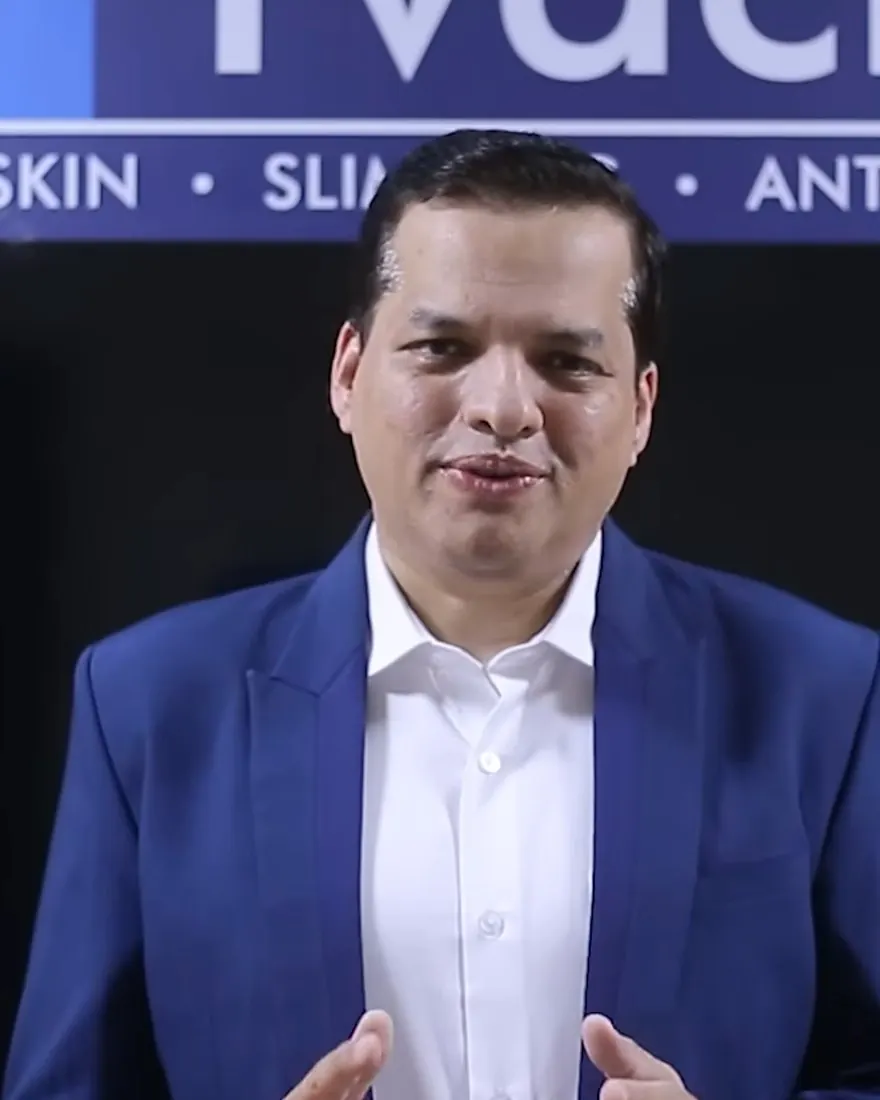
Written by
Dr Amit KarkhanisAesthetic Physician · MBBS, Dip. Dermatology (UK) · Reg. No. 2001/02/1124Founder of Dr Tvacha, practising in Thane since 2005. Leads the weight loss and hair programmes.
Sources
- Trichoscopy (DermNet)
- Telogen Effluvium (StatPearls, NCBI Bookshelf)
- Androgenetic Alopecia (StatPearls, NCBI Bookshelf)
- Alopecia Areata (StatPearls, NCBI Bookshelf)
- Hair loss (NHS)
This article is for general education and does not replace a consultation. Medicines and treatments are prescribed only after a doctor's assessment. Last reviewed 25 October 2026.