
Key takeaways
- Heavy bleeding is defined by its impact on your life, not by an exact amount of blood.
- In perimenopause, the most common reason is ovulatory dysfunction: cycles where you do not ovulate, so the lining builds up and sheds heavily.
- Every woman with heavy periods should have a blood count checked. Anaemia is very common in Indian women and worsens with heavy bleeding.
- NICE recommends the hormonal coil (levonorgestrel intrauterine system) as a first option for many women, with tablet treatments as alternatives.
- Bleeding between periods, after intercourse, or after menopause needs prompt assessment.
How do you know your periods are "heavy"?
So many Indian women have been told that heavy periods are normal and simply something to bear, "at this age". By their mothers, by their aunts, sometimes even by doctors. I don't accept that. NICE is clear that heavy menstrual bleeding is about its major impact on your quality of life, and treatment should aim to improve that.
The NHS describes signs of heavy periods as: - Changing pads every hour or two, or using two pads at once - Periods lasting longer than 7 days - Passing clots bigger than about 2.5 cm (roughly a ₹2 coin) - Leaking onto clothes or bedding, especially at night - Avoiding work, travel, temple visits or family functions because of your period - Often feeling tired or short of breath
My simple test: if you are planning your life around your period, it is heavy enough to be checked.
Why do periods get heavier in your 40s?
Cycles without ovulation. In perimenopause, some cycles do not release an egg. Without ovulation, the ovary makes little progesterone, so estrogen keeps building up the lining with nothing to balance it. I explain it like a wall where someone keeps adding plaster, layer after layer, and nobody tells them to stop. When it finally comes down, it comes down heavily. A review for gynaecology specialists describes ovulatory dysfunction as the most common cause of abnormal bleeding in perimenopause.
Structural causes. I also look for: - Fibroids, very common non-cancerous growths of the womb muscle. See Fibroids: your options before a hysterectomy - Polyps, small growths of the lining - Adenomyosis, where lining tissue grows into the womb muscle, often causing painful, heavy periods and a bulky womb
A thickened lining (endometrial hyperplasia). This becomes more of a concern with prolonged heavy bleeding, and with risk factors such as obesity, high blood pressure, diabetes, never having been pregnant, or estrogen exposure without a progestogen.
Other causes. Bleeding disorders, thyroid problems, some medicines such as blood thinners, and rarely womb cancer.
What tests are actually needed?
| Test | When it is used |
|---|---|
| Complete blood count | For every woman with heavy periods, as NICE recommends |
| Pelvic ultrasound (often transvaginal) | If the womb feels enlarged, a mass is suspected, or symptoms suggest fibroids or adenomyosis |
| Hysteroscopy (a camera into the womb) | If polyps, fibroids inside the cavity or lining problems are suspected |
| Endometrial biopsy | When risk is higher, for example persistent bleeding between periods or failed treatment; specialist reviews advise sampling for women over 45 with suspected anovulatory bleeding |
| Thyroid or clotting tests | Only if symptoms or history suggest them |
NICE advises against routinely testing female hormones for heavy bleeding, and against D&C alone as a test or treatment.
Why does anaemia matter so much?
The National Family Health Survey 5 found anaemia in about 57% of Indian women, up from 53% in the previous survey. Heavy periods make it worse month after month, like a slow leak in a tank that never gets fully refilled. Low haemoglobin and iron cause fatigue, breathlessness on the stairs, hair fall, poor concentration and palpitations, and all of these are easily mistaken for perimenopause itself.
Treating anaemia, with iron tablets or sometimes an iron infusion, often makes a clear difference to energy. Iron-rich Indian foods help too: green leafy vegetables, rajma, chana, til, jaggery in moderation, and eggs or meat if you eat them, with a source of vitamin C such as amla, lemon or guava to improve absorption.
What are the options before surgery?
NICE recommends the following, depending on your situation:
1. Hormonal coil (levonorgestrel intrauterine system). A small device placed in the womb that releases a progestogen locally. NICE suggests it as a first option for women with no structural cause, small fibroids under 3 cm that do not distort the cavity, or suspected adenomyosis. Bleeding may be irregular at first, and the benefit can take at least six cycles. It also provides contraception, and later can serve as the progestogen part of hormone therapy.
2. Non-hormonal tablets. Tranexamic acid, taken only on heavy days, reduces bleeding. Anti-inflammatory painkillers such as mefenamic acid also reduce flow and pain.
3. Hormonal tablets. Combined hormonal contraception or cyclical progestogen tablets can regulate and lighten periods, and help control irregular bleeding in perimenopause. These are prescription decisions after assessing your clot and other risks.
4. Endometrial ablation. A day procedure that destroys the womb lining to reduce or stop bleeding. It is suitable for women who have completed their family. Pregnancy afterwards is unlikely but not impossible, so contraception is still needed.
5. Treatment for fibroids or polyps. Polyps and some fibroids inside the cavity can be removed by hysteroscopy, often as a day procedure. Larger fibroids have their own options.
When is a hysterectomy considered?
Hysterectomy is a definitive answer and the right choice for some women. NICE advises that it should be discussed after other options, with a full conversation about effects on intimate and bladder function, recovery and alternatives. Removing healthy ovaries at the same time should only be done if you clearly wish it and give informed consent, because it causes immediate menopause.
There is also a time factor in your 40s. Periods will stop at menopause, which in Indian women comes at about 46 on average. The point is, for some women a treatment that controls bleeding for the remaining few years is all that is needed.
When should you seek help promptly?
- Bleeding between periods or after intercourse
- Bleeding after menopause, even a spot
- Soaking a pad in an hour for several hours, or feeling faint or breathless
- Heavy bleeding with new pelvic pain or pressure
How I approach this at Dr Tvacha
At Cocoon × Dr Tvacha in Thane West, I start with a long history, a blood count and, where indicated, a sonography, then explain every option from tablets to procedures before anything is decided. You get a written plan with fees and a review date. Read more about the Right Stop Programme on our women's health page, and see Perimenopause vs menopause.
Frequently asked questions
Are heavy periods normal in perimenopause?
Heavier and more irregular periods are common in perimenopause, mainly because some cycles happen without ovulation. But common does not mean you have to accept it. Heavy bleeding can cause anaemia and may hide fibroids, polyps or a thickened lining, so please get a blood count and an assessment, especially if you are over 45.
Do I need a biopsy for heavy periods in my 40s?
Not every woman does. Specialist reviews advise endometrial sampling for women over 45 with suspected anovulatory bleeding, particularly if bleeding is very heavy, prolonged or between periods. NICE recommends biopsy at hysteroscopy for women at higher risk, such as those with persistent bleeding between periods or treatment that has not worked. I decide this with you based on your history.
Is the hormonal coil safe in my 40s?
For many women it is a good option. NICE recommends it as a first choice for heavy bleeding without significant structural causes. It also works as contraception and can later provide the progestogen part of hormone therapy. Irregular spotting is common in the first few months, and it can take around six cycles to see the full benefit, so be patient with it.
Can heavy periods be a sign of cancer?
Rarely, but it is one reason assessment matters. The risk of a thickened or abnormal lining is higher with obesity, diabetes, high blood pressure, never having been pregnant, or estrogen exposure without a progestogen. Bleeding between periods, after intercourse or after menopause needs prompt assessment. Most of the time it is not cancer, but we check.
Will my heavy periods stop on their own?
They will stop at menopause, which comes at about 46 on average for Indian women. But the years before that can be the heaviest, and anaemia can quietly build up. Many women choose a treatment such as the hormonal coil or tablets to control bleeding until then, rather than enduring it or going straight to surgery.
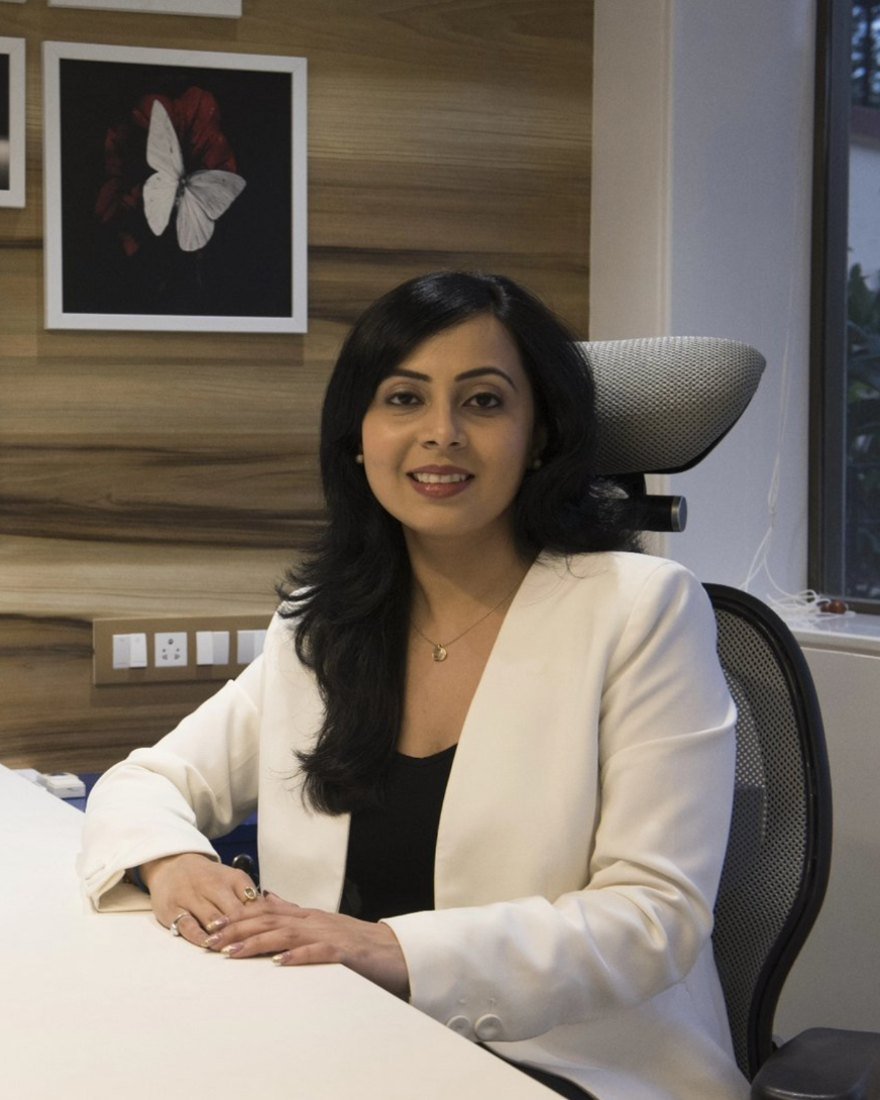
Written by
Dr Anagha KarkhanisGynaecologist and Fertility Specialist · Reg. No. 2006/02/1187Leads midlife women's health at Cocoon × Dr Tvacha, Thane.
Sources
- Heavy menstrual bleeding: assessment and management (NICE guideline NG88), recommendations
- Heavy periods (NHS)
- Evaluation and management of bleeding in perimenopausal women (SASGOG Pearls of Exxcellence)
- Prevalence and determinants of anaemia among women of reproductive age in India (IJCMPH)
- Age of menopause and determinants of menopause age: A PAN India survey by IMS (Journal of Mid-Life Health)
- Other treatments for uterine fibroids, including endometrial ablation (NICHD, NIH)
This article is for general education and does not replace a consultation. Medicines and treatments are prescribed only after a doctor's assessment. Last reviewed 25 October 2026.